

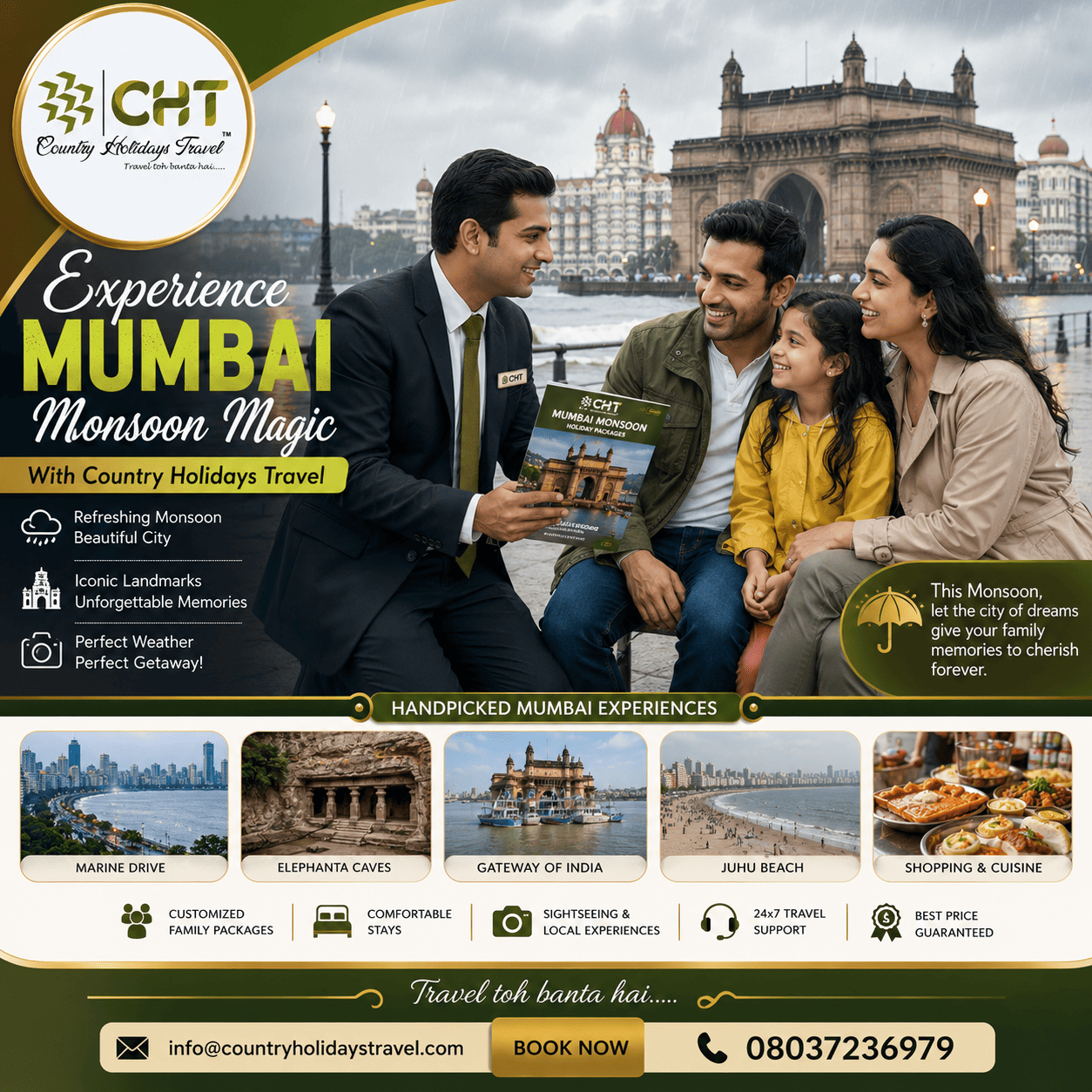
Mumbai—formerly known as Bombay—is a city that never sleeps, constantly buzzing with an intoxicating energy. It is a mesmerizing melting pot where India’s richest billionaires live down the street from sprawling historical settlements, where grand colonial-era architecture stands tall beside sleek modern skyscrapers, and where the intense pace of daily life is beautifully balanced by the calm, crashing waves of the Arabian Sea.
Whether you are a history buff, a culinary adventurer, or someone looking to experience the electric rhythm of India’s financial and entertainment capital, Mumbai promises an unforgettable sensory experience. Here is your ultimate comprehensive guide to exploring the "Maximum City" in four action-packed days.
Mumbai experiences a tropical climate, making timing crucial for an enjoyable trip:
October to March (Winter): The best time to visit. The weather is relatively cool, dry, and pleasant for walking around the city.
June to September (Monsoon): The city experiences torrential rains. While the sea looks dramatic and the nearby hills turn lush green, heavy downpours can severely disrupt local transit.
April to May (Summer): Extremely hot and humid. Outdoor sightseeing can be exhausting during these months.
Start your journey in South Mumbai (affectionately called "SoBo"), where the city's rich history comes alive through stunning Gothic Victorian architecture.
Begin at the Gateway of India, an architectural marvel built to commemorate the visit of King George V. Right across the road sits the iconic Taj Mahal Palace Hotel. Even if you aren't staying there, step inside to admire its heritage wing or enjoy a premium high tea overlooking the harbor.
Take a leisurely walk down the heritage district toward Chhatrapati Shivaji महाराज Terminus (CSMT), a UNESCO World Heritage site and one of the busiest, most stunning railway stations in the world. Next, head over to the Kala Ghoda Art Precinct, an area bursting with independent art galleries, quirky boutique cafes, and vibrant street art.
End your first day by taking a taxi to Marine Drive, a 3.6-kilometer beachfront promenade. As the sun sets over the Arabian Sea, the streetlights turn on in a perfect curve, earning it the nickname "The Queen’s Necklace." Grab a seat on the concrete promenade, feel the sea breeze, and watch the city wind down.
Start your morning with a visit to the Haji Ali Dargah, a stunning 15th-century mosque located on an islet off the coast, accessible only during low tide via a narrow pathway. Afterward, head to the Shree Siddhivinayak Temple, one of the most revered temples dedicated to Lord Ganesha.
Immerse yourself in the bustling local commerce at Crawford Market (Mahatma Jyotiba Phule Mandai). From exotic fruits and spices to clothes and household goods, this old-world indoor market is a sensory overload in the best way possible.
Head to Girgaon Chowpatty beach as dusk falls. This is the ultimate hub for Mumbai's legendary street food.
Must-Try Dishes: Vada Pav (the city’s signature potato burger), Pav Bhaji (spicy mashed vegetables served with buttered bread), and Bhel Puri (a crunchy, tangy puffed rice snack).
Cross over the architectural marvel that is the Bandram-Worli Sea Link to head into the trendy northern suburbs.
Mumbai is the home of Hindi cinema (Bollywood). Take a drive past Mannat and Galaxy Apartments—the respective residences of superstars Shah Rukh Khan and Salman Khan—where thousands of fans gather daily just to catch a glimpse of their favorite icons.
Spend your afternoon exploring Bandra West. Wander through the graffiti-lined lanes of Chuim and Ranwar villages, which preserve old Portuguese-style heritage homes. Stop by one of the neighborhood's third-wave coffee roasters or vegan cafes for lunch.
Walk along the rocky coastline of Bandra Bandstand. Sit near the ruins of the old Castella de Aguada (Bandra Fort) and enjoy a sweeping view of the Sea Link illuminated against the night sky.
Head back to the Gateway of India early in the morning and board a ferry to Elephanta Island. A short trek or toy-train ride leads you up to the 5th-century rock-cut cave temples dedicated to Lord Shiva, featuring magnificent, massive stone sculptures.
Return to the mainland and experience the city’s absolute pulse—the Mumbai Local Train. Avoid peak rush hours (8:30 AM – 11:00 AM and 6:00 PM – 9:00 PM) and take a short, non-peak ride from Churchgate station to get a true taste of how millions move across this metropolis daily.
Commuting: Use the local trains for long distances during non-peak hours. For shorter distances, standard metered black-and-yellow auto-rickshaws (only allowed in the suburbs) and Kaali-Peeli taxis are incredibly reliable and honest.
Stay Connected: Download ridesharing apps like Uber or Ola, and mapping apps to navigate traffic patterns effectively.
Keep Hydrated: Mumbai's humidity can drain your energy quickly. Keep drinking bottled water, fresh coconut water, or local Nimbu Pani (lemonade) throughout the day.
Pro Tip: If you want an authentic local experience, wake up at 5:30 AM on a Sunday and visit the Sassoon Docks to watch the colorful chaotic hustle of Koli fishermen bringing in their fresh morning catch.

 Lowest Price We ensure low rates on hotel reservation and on flight tickets.
 Easy Booking We offer easy and convenient flight bookings with attractive offers.